
· ARUM Team · LED Knowledge
IP67 vs IP68 Waterproof LED Strip — What's the Difference and Which Do You Need?
IP67 and IP68 waterproof LED strips differ by one digit but serve very different applications. This guide explains the real difference and which to choose for outdoor, bathroom, and underwater use.
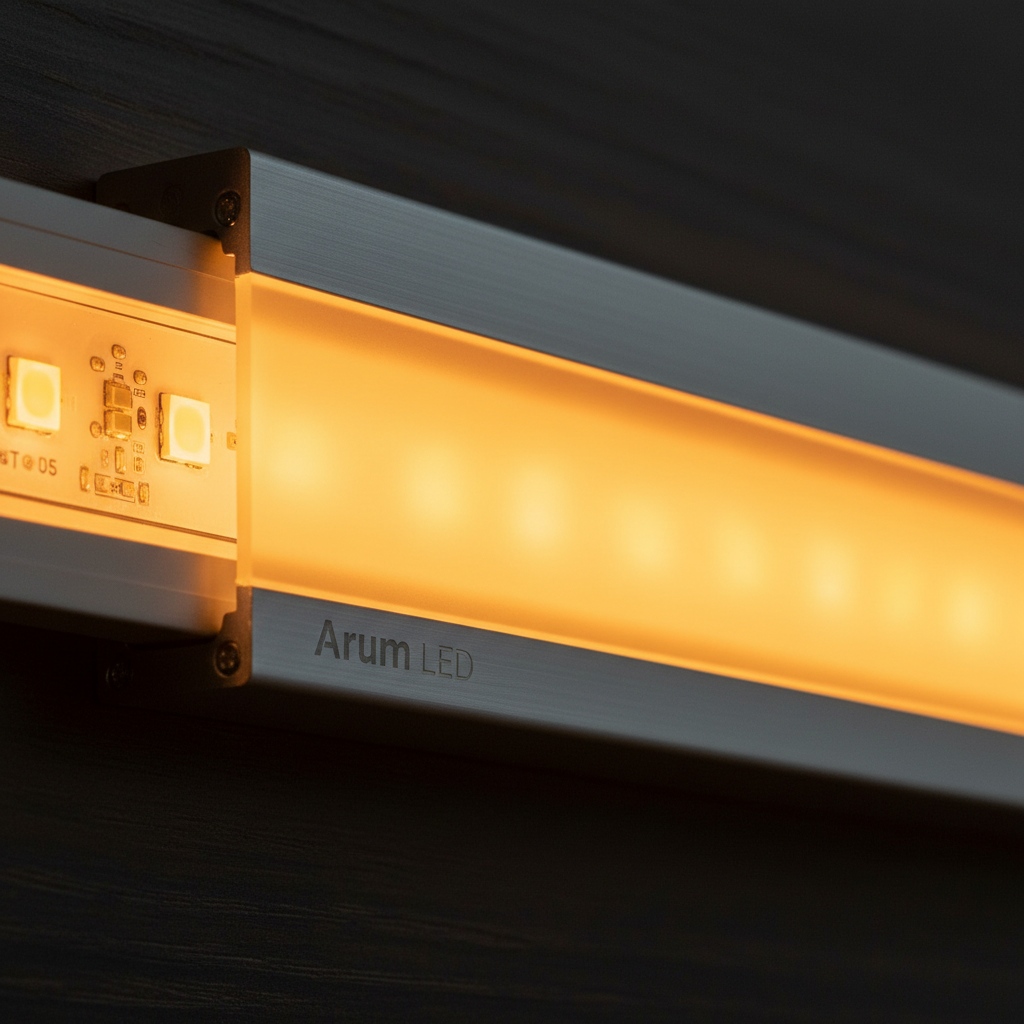
When choosing outdoor or wet-area LED strips, the choice between IP67 and IP68 comes up often. The numbers are just one digit apart, but the practical difference is significant — and so is the price gap. Here’s what actually separates them.
What Is an IP Rating?
IP (Ingress Protection) is an international standard (IEC 60529) describing protection against solid particles and liquids. It consists of two digits:
- First digit (0–6) — protection against solid particles and dust (6 = fully dust-tight)
- Second digit (0–9K) — protection against water (higher = better protection)
Common IP ratings for LED strips in Thailand: IP20, IP65, IP67, IP68.
IP67 vs IP68: The Real Difference
| Property | IP67 | IP68 |
|---|---|---|
| Dust protection | 100% | 100% |
| Submersion depth | 1 meter | >1 meter (manufacturer specified) |
| Submersion duration | 30 minutes | Continuous |
| Sealing method | Silicone tube over strip | Full potting compound fill |
| Flexibility | Good | Stiffer — harder to bend |
| Price premium | Standard | 40–80% higher |
In plain terms: IP67 = can be temporarily submerged. IP68 = can be permanently underwater.
Which Applications Need Which?
IP65 is sufficient for:
- Bathrooms receiving only water vapor and splash
- Kitchens with steam but no direct water
- Covered balconies and porches
IP67 is required for:
- Outdoor installations exposed to direct rain
- Pool perimeter lighting (edge of pool, not underwater)
- Areas that may temporarily flood
IP68 is required for:
- Underwater lighting in swimming pools, fountains, and fish ponds
- Marine applications
- Permanently wet surfaces (under waterfalls, etc.)
How to Verify a Genuine IP Rating
IP ratings are frequently misrepresented. Verify before buying:
Inspect the construction — true IP67 has a thick silicone tube visibly encasing the strip. True IP68 has a solid potting compound filling — you can see the chip array embedded in clear epoxy.
Water submersion test — submerge just the end of the strip in a glass of water for 5 minutes. If air bubbles emerge, the seal is inadequate.
Request certification — genuine IP-rated products have test lab certification with a verifiable report number.
Check weight — IP68 is noticeably heavier per meter than IP65 due to the potting compound fill.
Critical Installation Notes
Even IP67 and IP68 strips have weak points:
- Cut ends must be sealed — after cutting, the exposed end is no longer protected. Apply silicone sealant or heat-shrink end caps before installation. Unsealed cut ends will fail within days in wet conditions.
- Use waterproof connectors — all junction points must use IP67-rated waterproof connectors, not standard clip connectors.
- Power supply must be matched — the PSU must also be appropriately IP-rated for the installation location. Use IP67 PSU for outdoor, or install a standard PSU inside a sealed IP-rated enclosure.
- IP68 runs hotter — the potting compound reduces heat dissipation. Derate the strip to 70% of its rated power to maintain temperature within spec.
When to Replace Waterproof LED Strips
Quality waterproof COB LED strips are rated for 30,000–50,000 hours. Outdoor environments reduce effective lifespan by approximately 20–30%.
Replace when you observe:
- Water pooling visible inside the silicone tube
- Sections going dark specifically after heavy rain
- UV-induced cracking in the silicone jacket
- Brightness drop of more than 30%
- Color shifting to green-yellow (from chlorine/moisture chemical exposure)
Arumstores supplies IP65, IP67, and IP68 COB LED strips for 24V systems, along with IP67 power supplies and waterproof connectors.
Summary
IP67 is the right choice for the vast majority of outdoor and wet applications. IP68 is specifically for permanent underwater use — it’s unnecessary and expensive for anything else. Don’t over-specify, but don’t under-specify either.
Browse all LED strip products or contact Arumstores for waterproofing guidance on your specific project.