
· ARUM Team · Installation
LED Strip Lighting for Swimming Pools — Choosing Waterproof Strip and Installing It Safely
LED strip lighting around a swimming pool needs the right waterproof rating and electrical setup. This guide covers safe placement, required specs, and the electrical precautions to take near water.
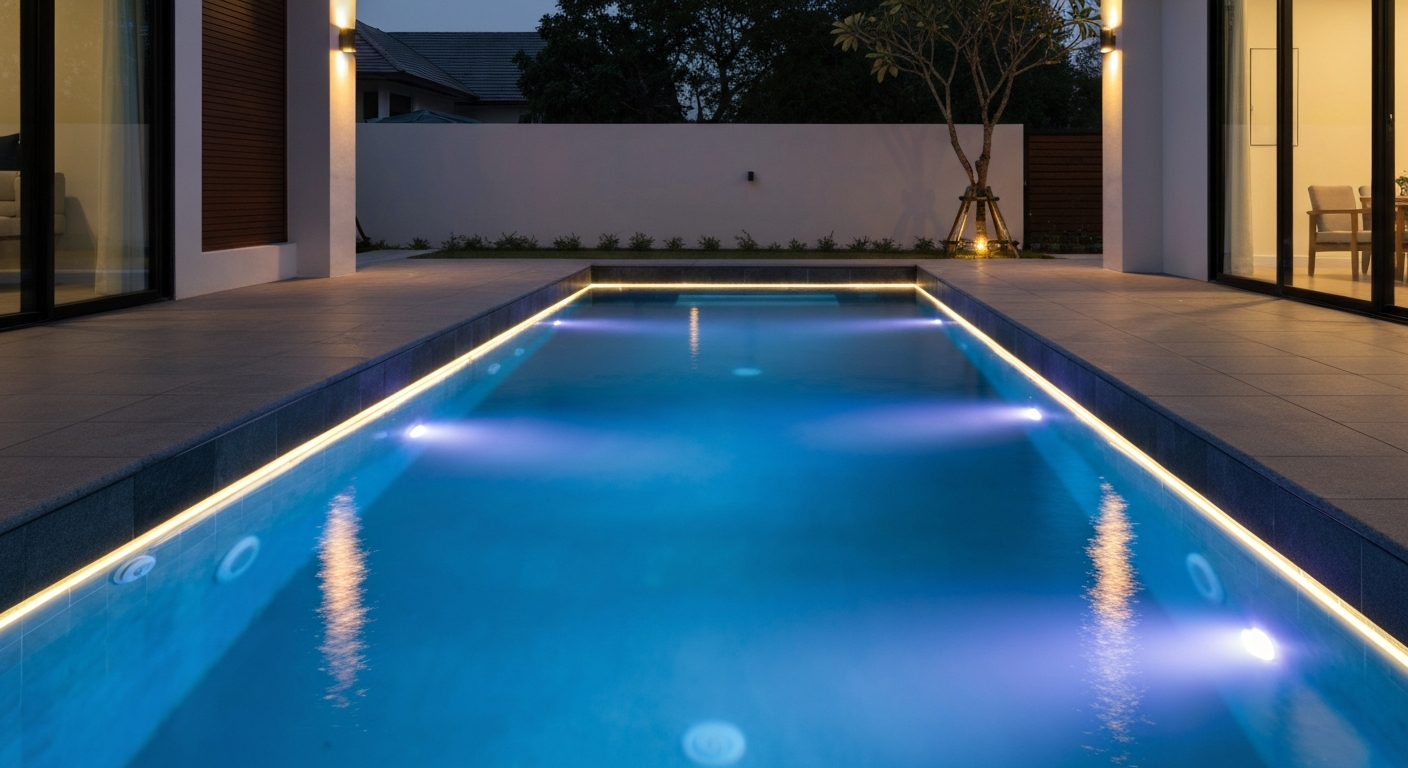
A pool at night with light tracing along the waterline instantly makes a home or resort feel premium. But the pool surround is also one of the riskiest zones for any lighting system — humidity, chlorine vapor, and the direct safety risk of electricity near water. Get the spec or the placement wrong, and the result isn’t just early failure, it’s a real safety hazard.
Where LED Strip Works Around a Pool
Standard LED strip isn’t built for permanent submersion the way dedicated underwater pool lights are, but it works very well in the zones around a pool that see occasional splash or humidity rather than constant submersion:
- Waterline edge — mounted under the tile edge at the pool rim, so light sits just above the water surface and the pool boundary reads clearly at night
- Pool steps — mounted under each step edge to make step levels clearly visible and reduce slip risk
- Glass mosaic feature walls — mounted behind translucent tile so light shines through in a pattern
- Pool deck edges — traced along deck or walkway edges to visually separate the pool zone from the lounge area
For anything permanently submerged, use a dedicated underwater pool light instead — those are sealed specifically for constant water immersion over their full service life.
Required Specs Near a Pool
| Factor | Recommendation |
|---|---|
| Waterproof rating | IP67 minimum for any spot exposed to regular splash — see What Is IP Rating for the differences between ratings |
| Voltage | 24V DC systems only — never run 220V AC wiring directly near the pool edge |
| Housing material | Full silicone-encased strip, not just a thin surface coating, for better resistance to chlorine exposure |
| Connectors | Waterproof connectors at every joint — no exposed, unsealed splice points anywhere near the pool |
Electrical Safety — Non-Negotiables
- Never run 220V AC equipment close to the pool edge. Standard safety practice keeps AC equipment at least 2-3 meters from the pool. Anything near the water should run on low-voltage 24V DC, powered from a supply unit mounted in a dry location well away from water.
- Use an RCD/RCBO (residual current device) on every circuit serving a wet area, so power cuts immediately if any current leakage occurs.
- Route cabling through waterproof conduit, buried underground or hidden in the structure — never leave cable exposed in areas people walk through or where water can pool.
- Have an experienced electrician handle the installation. Electrical work near water isn’t a DIY job — have a professional verify power supply placement and cable routing before installation.
Maintenance for Long-Term Use
- Clean chlorine residue and algae buildup off the LED strip periodically — prolonged chemical buildup accelerates degradation of the silicone housing
- Inspect connectors and the power supply before each rainy season, since accumulated moisture is the leading cause of dead spots
- Install in a position that’s easy to access for future repairs
Summary
Pool-area lighting can transform a space instantly, but only if the spec and electrical setup are right from the start. IP67-or-higher waterproofing, a 24V DC low-voltage system, and an RCD are the three things you can’t skip when working near water.
Planning lighting for your pool area? Browse our full range of waterproof LED strip at ARUM Products or contact the ARUM team for a free consultation on safe lighting design near water.