· ARUM Team · Interior & Design
LED Strip for Backlit Shelves — How to Choose, Position, and Install for a Clean Halo Effect
LED strip shelf backlighting adds depth and atmosphere to any display shelf instantly. Learn which strip type, CCT, and mounting position create the cleanest backlit glow.
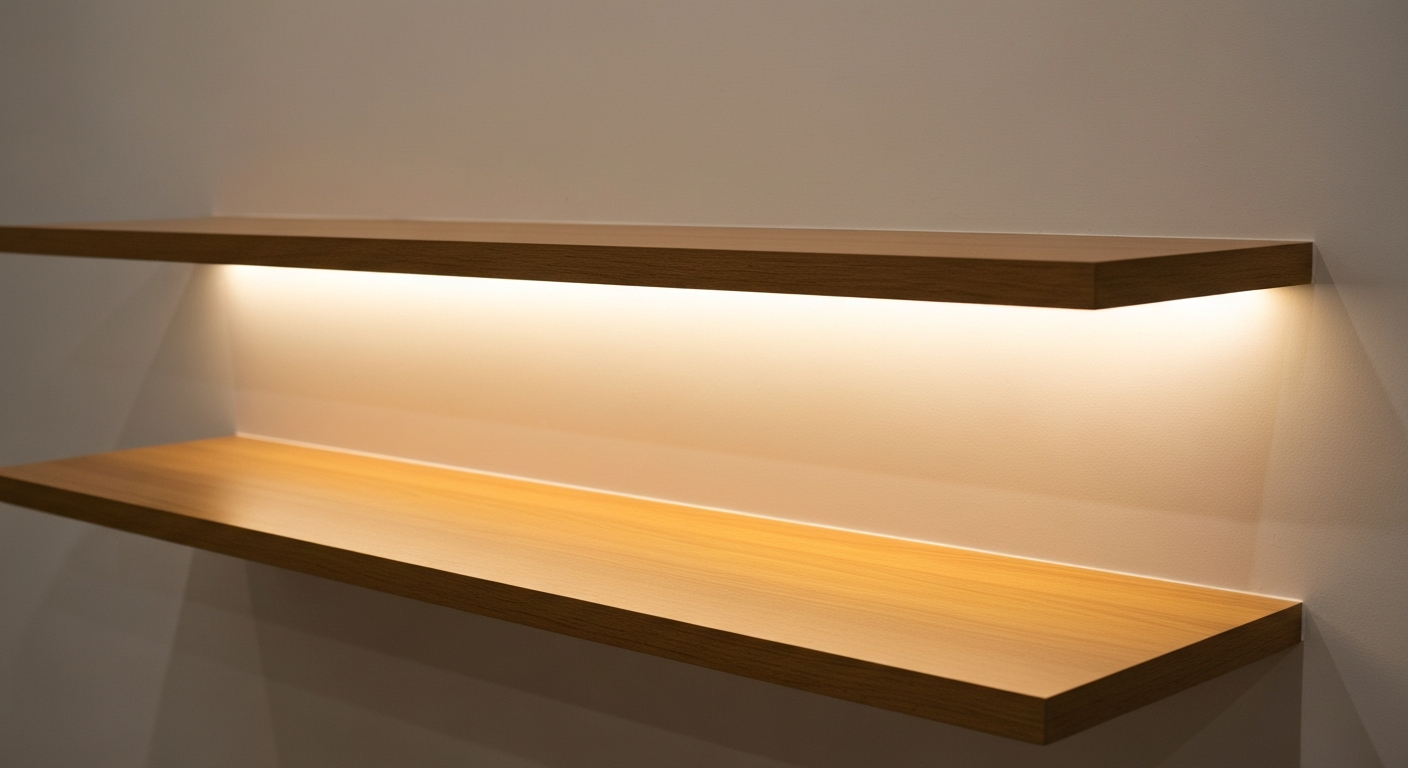
A plain shelf and a shelf with LED strip backlighting are two completely different things — especially after dark.
Backlit shelf lighting means placing an LED strip behind or beneath the shelf to create a halo or glow effect that makes display shelves, bookshelves, and TV units look dimensional, intentional, and noticeably more premium.
This guide covers everything: which strip type to choose, exactly where to position it, and how to hide the wiring so it all looks clean.
Backlit vs. Under-Shelf: What’s the Difference?
Before picking a strip, know which effect you’re after:
| Effect | Strip Position | Result |
|---|---|---|
| Backlit (halo) | Rear of shelf, facing wall | Light spills out from behind, creating a soft glow around the shelf |
| Under-shelf (task) | Underside of shelf | Light shines down onto the surface below — functional |
| Edge glow | Along the shelf edge | Light traces the perimeter — graphic, modern look |
For a true backlit halo, the strip should sit at the rear of the shelf, 3–5 cm from the wall. Any closer and you’ll see a hard line of light instead of a soft diffused glow.
Which LED Strip Type Works Best?
1. COB LED Strip — Top Recommendation for Backlighting
COB (Chip-on-Board) strips have a continuous run of chips, producing completely even, hotspot-free light. For backlit shelves this matters a lot because:
- No visible dots or bright spots
- Smooth, uniform glow from edge to edge
- Slim profile — fits easily inside an aluminium channel
2. SMD 2835 / 3528 — Fine Inside a Channel
SMD strips work well if installed inside an aluminium channel with a diffuser cover. You’ll need at least 120 chips/metre to avoid visible dotting.
3. Neon Flex — Best for Defined Edge Lines
If you want a crisp, graphic edge rather than a soft halo, Neon Flex is the right tool. It’s bulkier and harder to hide, but the clean linear look is hard to match.
Choosing the Right CCT (Colour Temperature)
CCT has a bigger impact on mood than most people realise:
- 2700K–3000K (Warm White) — Cosy and premium; ideal for living rooms and display shelves in homes
- 3500K–4000K (Neutral White) — Balanced and contemporary; suits retail and offices
- 6000K–6500K (Cool White/Daylight) — Bright and detail-revealing; great for product display or electronics
For most home installations, 2700K–3000K creates the most inviting atmosphere — especially in the evening.
How to Install the Strip for Each Effect
Option 1 — Backlit Halo
[Wall] ← 3–5 cm → [LED in aluminium channel] ← Shelf board →- Mount the aluminium channel at the rear of the shelf, opening facing the wall
- Leave at least 3 cm between the shelf and wall (5 cm gives a softer result)
- Use COB or SMD + diffuser inside the channel
- Run the cable out from below or the side of the shelf where it can be hidden
Option 2 — Combined Under-Shelf + Backlit
For both function (illuminating what’s below) and atmosphere (halo effect):
- Front underside: strip near the front edge, facing down
- Rear: strip facing the wall for the halo
Both can run from a single power supply if the total run is under 3–4 metres.
Do You Need an Aluminium Channel?
Yes, always — particularly for shelf work:
- Diffuses light — channel + diffuser cover smooths out the output significantly
- Manages heat — protects the strip and extends its life
- Easy to mount — screw or double-sided tape depending on the shelf weight
Channel types:
- Corner/angle channel — mounts at 45° inside a rear groove; ideal for halo effect
- Surface mount channel — sits flat on a surface; ideal for under-shelf
- Recessed channel — routes into a slot in MDF for a flush, invisible look
Wattage and Power Supply Guide
For residential shelf lighting, you don’t need high wattage:
| Shelf Length | 5W/m Strip | 10W/m Strip | 15W/m Strip |
|---|---|---|---|
| 1 m | 5W | 10W | 15W |
| 2 m | 10W | 20W | 30W |
| 3 m | 15W | 30W | 45W |
- Ambient backlit effect: 5–8W/m is plenty
- Under-shelf task light: 10–15W/m for bright functional light
Always size your power supply at 20–30% above the actual load. See the power supply calculation guide
How to Hide the Wiring
Exposed wiring is the most common reason a backlit shelf install looks unfinished.
Practical solutions:
- Route inside a groove — if the shelf is MDF, router a small channel before assembly
- Use cable clips along the inside edge
- Drill a small hole to run the cable down behind the shelf
- Cord cover strip on the wall, painted to match, if the cable needs to travel down to the power supply
Backlit Shelf Ideas to Steal
- Floating living room shelf — warm white halo above the sofa
- Display / collectibles shelf — RGB+CCT strip you can tune to any colour
- Bedroom headboard shelf — warm backlit with dimmer for winding down
- Kitchen wall cabinet — neutral white under-shelf for prep task lighting
- TV accent shelf — LED behind a shelf around the TV to reduce eye strain and add depth
Summary
LED strip shelf backlighting is one of the highest-impact, lowest-cost home upgrades you can make — and the result is visible immediately.
The winning formula:
- COB LED strip in an aluminium channel with diffuser
- 3–5 cm gap between strip and wall for a soft halo
- 2700K–3000K for residential warmth
- Add a dimmer to adjust mood by time of day
Want help choosing the right strip and channel for your shelf project? Contact the ARUM team or browse all LED strip products