
· ARUM Team · LED Knowledge
10 Most Common Questions About COB LED Strips — Answered
Answers to the 10 most frequently asked questions about COB LED strips — from choosing the right model and installing it correctly to troubleshooting and lifespan.
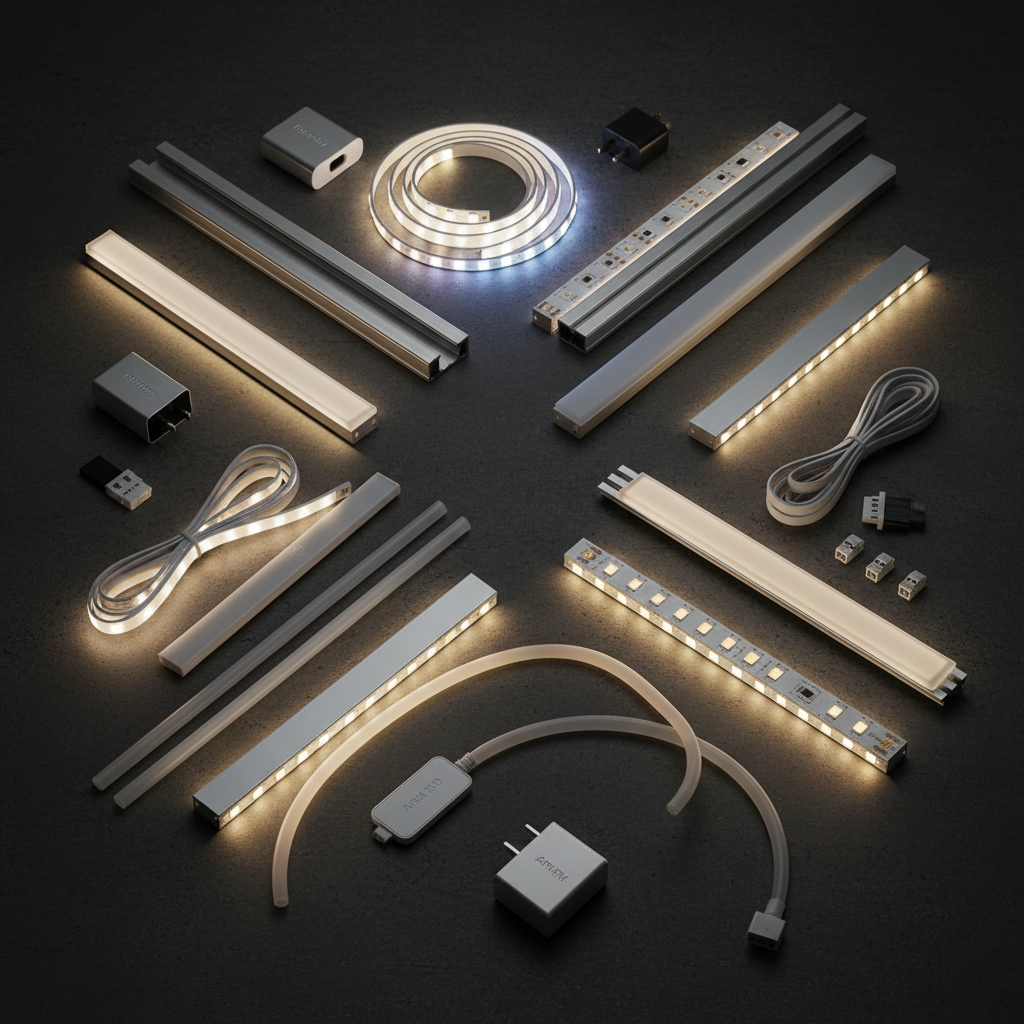
COB LED is one of the most searched topics in the LED world right now, but there are still plenty of misconceptions and questions floating around. Here are the 10 questions the Arumstores team gets asked most often — answered straight.
Q1: How Is COB LED Different from SMD LED?
A: COB (Chip On Board) bonds hundreds of tiny chips directly onto a single PCB surface, then seals them under a phosphor layer — light comes out as a continuous, seamless strip with no visible dots.
SMD (Surface Mount Device) attaches individual chips at regular intervals. You can clearly see each LED as a distinct dot.
In practice: COB is the right choice when the strip is visible up close and you want smooth, premium-looking light (cove lighting, backlights). SMD works for general applications and budget projects.
Q2: What Size Power Supply Do I Need?
A: Use this formula: W/m × length × 1.25
Example: COB 12W/m × 10 meters = 120W × 1.25 = 150W PSU
Always choose the next standard size up from your calculated wattage. A PSU running at full capacity will overheat and fail early. Standard sizes: 60, 75, 100, 120, 150, 200, 250, 300W.
Q3: Should I Choose 12V or 24V?
A: Always use 24V if your run is longer than 3 meters. At the same wattage, a 24V system draws half the current of 12V (I = P/V), which means half the voltage drop.
Use 12V only for short, small-scale installations — inside furniture or under a small cabinet.
Q4: Do I Need an Aluminum Channel?
A: Yes, if you’re using the strip for more than 2 hours per day. COB strips run significantly hotter than SMD. Aluminum channels reduce strip temperature by 17–24°C — extending lifespan by 1.5 to 2 times.
Without a channel, a strip rated for 10 years may fail in 2–3 years. The channel is one of the best investments per meter you can make.
Q5: How Often Can the Strip Be Cut?
A: COB strips can be cut every 1–2.5 cm at the marked scissor symbols. Never cut between the marks — you’ll damage the circuit and lose an entire segment.
After cutting, seal the exposed end with silicone if used in a humid environment.
Q6: What’s the Difference Between 2700K, 3000K, and 4000K?
A: CCT (Correlated Color Temperature) describes the warmth or coolness of the light:
- 2700K — very warm, amber-yellow tone. Hotels, bedrooms
- 3000K — warm white, most popular for living rooms. The universal “safe” choice
- 4000K — neutral white. Kitchen, bathroom, office
- 6000K — cool blue-white. Workspaces, switchboards
If in doubt, choose 3000K — it works in almost any setting.
Q7: What Is CRI and Does It Matter?
A: CRI (Color Rendering Index) measures how accurately a light source shows colors compared to natural sunlight. Scale: 0–100.
- CRI 80 — general use, acceptable for most home applications
- CRI 90+ — color-sensitive applications: product display, makeup, photography
- CRI 95+ — studio-grade, highest accuracy
If the product doesn’t state CRI, assume it’s below 80 and avoid it for quality-conscious applications.
Q8: Can I Install COB LED in a Bathroom?
A: Yes, but you must choose IP65 or higher for any bathroom application. Bathrooms have steam and moisture year-round. Standard IP20 strips will fail within months.
Near the shower or inside a wet zone: use IP67 for reliable long-term performance.
Q9: Why Is My LED Strip Dimmer at the Far End?
A: This is voltage drop — physics, not a product defect. Solutions:
- Dual feed — connect power at both ends of the strip
- Split into segments — never run more than 5m from a single injection point
- Use heavier feed wire — AWG 18 or larger for distances over 3m from the PSU
Q10: How Long Will COB LED Strips Last?
A: Quality COB LED strips are rated at 30,000–50,000 hours (L70) — meaning they retain at least 70% of original brightness at that point. At 8 hours per day, that’s 10–17 years.
However, without aluminum channel heat management, expect lifespan to drop significantly.
Signs it’s time to replace:
- Brightness has dropped more than 30% from when first installed
- Visible color shift (warm white turning yellow or developing pink spots)
- Permanent dark sections that can’t be fixed
- Flickering even after replacing the power supply
Summary
These 10 questions cover almost everything you need to know before buying and installing COB LED strips. If you have anything else you’re wondering about, the Arumstores team is happy to help. Browse all COB LED strips.